Trump's Red Spots: Doctor explains "preventive treatment"
The health of prominent public figures, particularly those who have held or aspire to hold the highest office, consistently captures the attention of the media and the public alike. Every nuance, every public appearance, and even minor physical changes become subjects of intense scrutiny. This dynamic was once again on full display when former President Donald Trump appeared with visible red spots on his neck, immediately sparking widespread speculation and discussion. As is often the case with high-profile health matters, the immediate question was: What is the explanation? And true to form, his medical team quickly responded, demonstrating that when it comes to such observations, the public expects swift clarity. The phrase 'trumps arzt äußert sich' or 'Trump's doctor comments' once again became central to public discourse, underscoring the demand for transparency regarding a leader's well-being.
The Recent Incident: Red Spots and a "Preventive Treatment" Explained
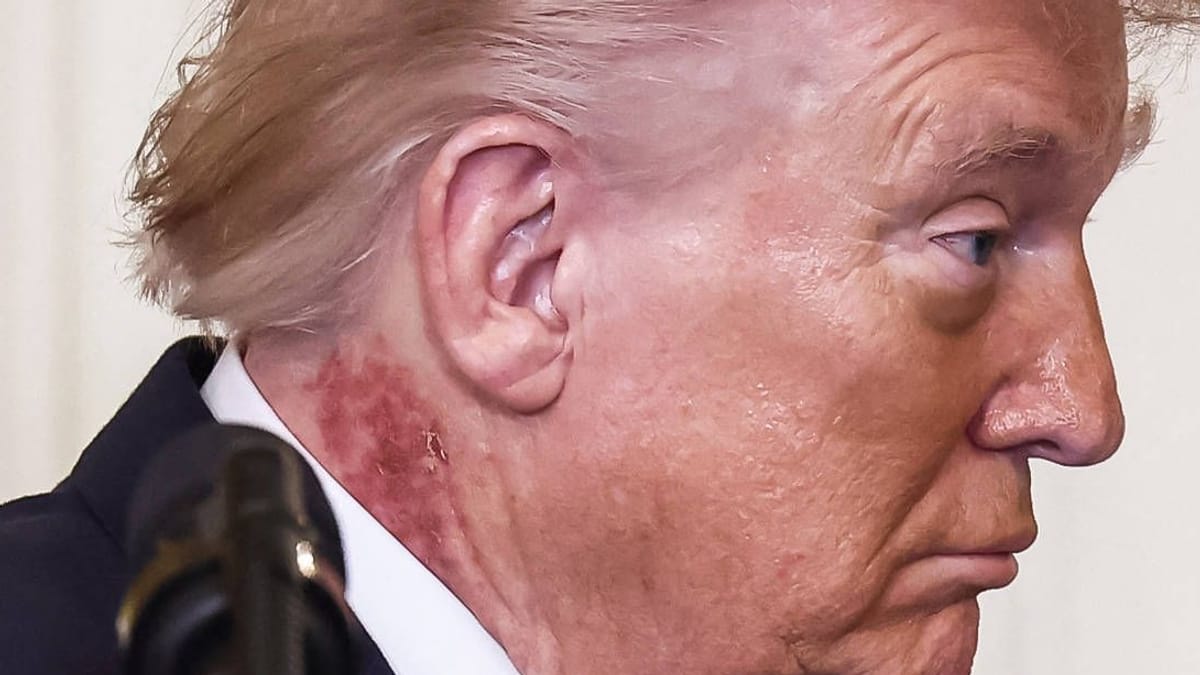
During a public appearance, observers quickly noticed a distinct reddish discoloration on the right side of Donald Trump’s neck. The mark was clearly visible above his shirt collar, extending upwards towards his ear. This observation, though seemingly minor, quickly became a talking point across news outlets and social media platforms, highlighting the intense focus on every aspect of a former president's public image and health.
In response to the public interest and questions, his personal physician, Dr. Sean Barbabella, issued a statement. According to Dr. Barbabella, the noticeable red area was a direct reaction to a "preventive skin treatment." This explanation aimed to quell speculation by providing a straightforward medical context for the visible mark.
Understanding "Preventive Skin Treatment"
What exactly does "preventive skin treatment" entail, especially for an individual in their late 70s with a history of significant sun exposure? It typically refers to procedures or topical medications designed to address potential skin issues before they become serious or to treat pre-cancerous lesions. Common examples include:
- Actinic Keratoses (AKs): These are rough, scaly patches on the skin caused by years of sun exposure. They are considered pre-cancers because they have the potential to develop into squamous cell carcinoma, a type of skin cancer. Treatments for AKs often involve cryotherapy (freezing them off), topical chemotherapy creams (like 5-fluorouracil or imiquimod), or photodynamic therapy.
- Sun Damage Repair: Beyond AKs, general sun damage can lead to various skin irregularities. Preventive treatments might aim to reduce oxidative stress, improve skin texture, and mitigate the long-term effects of UV radiation, which could involve chemical peels or laser treatments.
- General Skin Health Maintenance: For individuals with fair skin or a history of significant outdoor activity, regular dermatological check-ups and proactive treatments are crucial for early detection and prevention of skin cancers, including basal cell carcinoma and melanoma.
The neck, being an often-exposed area, is a common site for sun damage, making it a frequent target for such preventive measures. While Dr. Barbabella’s statement was concise, it points to a common and responsible approach to skin health, particularly for individuals who have spent considerable time outdoors throughout their lives. The visible redness would likely be a temporary side effect of such treatments, indicating the skin's reaction to the therapeutic process.
The Broader Context of Presidential Health Disclosure
The intense public interest in Donald Trump's red spots is not an isolated incident but rather fits into a long-standing tradition of scrutinizing the health of U.S. presidents and presidential candidates. The rationale is clear: the physical and mental well-being of the Commander-in-Chief directly impacts their ability to perform the demanding duties of the office. From Franklin D. Roosevelt's polio to John F. Kennedy's Addison's disease, historical examples demonstrate how presidential health can shape policy, public perception, and even global events.
In the modern era, with 24/7 news cycles and instant global communication, the level of scrutiny has amplified exponentially. Every cough, stumble, or visible mark becomes a subject of analysis. While balancing a public figure's right to privacy with the public's right to know remains a delicate ethical tightrope, most agree that a certain degree of transparency is essential for building trust and ensuring confidence in leadership. However, the exact extent of this transparency often becomes a contentious issue, leading to debates about medical ethics and public disclosure standards.
A Look Back: Harold Bornstein and Past Health Controversies
The recent explanation by Dr. Sean Barbabella regarding Trump's red spots comes against a backdrop of previous controversies surrounding Donald Trump's medical disclosures, primarily involving his former physician, Harold Bornstein. This history has arguably contributed to the heightened public sensitivity and the immediate demand for clear explanations when new health observations emerge.
During the 2016 presidential campaign, Dr. Harold Bornstein, who had treated Trump since 1980, penned a letter that swiftly became infamous. It famously described Trump's health in superlatives, declaring him to be "the healthiest individual ever elected to the presidency." The letter's effusive and unprofessional tone raised immediate eyebrows within the medical community and among the public. Furthermore, it contained glaring errors, such as the grammatical misstep "to whom it my concern" instead of "to whom it may concern."
The controversies deepened when Dr. Bornstein claimed affiliation with Lenox Hill Hospital, which subsequently denied his employment or privileges there. Questions also arose about his medical credentials, specifically his specialty as a gastroenterologist, and whether it was appropriate for him to offer a comprehensive assessment of overall physical and mental health. Indeed, other medical professionals publicly denounced the letter as "unprofessional, unethical, and violating common sense." They emphasized that a specialist in gastroenterology, while qualified to comment on digestive health, is not typically equipped to provide an exhaustive summary of a patient's entire physical and psychological constitution.
Bornstein later admitted he had been in a rush when writing the letter, but the damage to perceptions of transparency and medical professionalism was already done. This episode underscored a broader issue during the 2016 campaign, where the health of candidates became a political weapon. Trump himself frequently questioned Hillary Clinton's health, often citing a 2012 concussion and circulating videos he claimed showed epileptic seizures.
This history of public scrutiny, and sometimes controversy, regarding Trump's health records traces back to his 2016 presidential campaign and the highly unusual health letter penned by his then-personal physician, Harold Bornstein. For more details on this particular episode, you can read about Harold Bornstein: Trump's controversial doctor and health reports. The broader implications of these events on medical professionalism and patient confidentiality are explored further in Trump's Doctors: Unprofessional conduct and public health ethics.
Understanding "Preventive Treatment": Tips for Optimal Skin Health
The discussion around Donald Trump's "preventive skin treatment" offers an excellent opportunity to highlight the importance of proactive skin health management for everyone, not just public figures. Our skin is our largest organ, constantly exposed to environmental factors, especially the sun. Here are some practical tips and actionable advice for maintaining optimal skin health and preventing future issues:
- Regular Skin Self-Exams: Get to know your skin. Regularly examine your entire body for any new spots, moles that are changing in size, shape, or color, or any lesions that bleed, itch, or don't heal. Use a mirror for hard-to-see areas or ask a partner for help.
- Annual Dermatologist Check-ups: Regardless of your risk factors, a professional skin examination by a dermatologist is crucial, especially as you age or if you have a history of significant sun exposure. They can spot issues you might miss and perform necessary biopsies.
- Diligent Sun Protection:
- Broad-Spectrum Sunscreen: Apply sunscreen with an SPF of 30 or higher daily, even on cloudy days, to all exposed skin. Reapply every two hours or after swimming/sweating.
- Protective Clothing: Wear wide-brimmed hats, sunglasses, and long-sleeved shirts when outdoors, particularly during peak sun hours (10 a.m. to 4 p.m.).
- Seek Shade: Limit your direct sun exposure, especially during the midday hours.
- Be Aware of the ABCDEs of Melanoma: This mnemonic helps identify suspicious moles:
- Asymmetry: One half doesn't match the other.
- Border irregularity: Edges are ragged, notched, or blurred.
- Color variation: Different shades of brown, black, or even patches of red, white, or blue.
- Diameter: Larger than 6 millimeters (about the size of a pencil eraser).
- Evolving: Any change in size, shape, color, elevation, or any new symptom like bleeding, itching, or crusting.
- Moisturize Regularly: Keep your skin hydrated to maintain its barrier function and overall health.
- Stay Hydrated and Eat a Healthy Diet: A diet rich in antioxidants and proper hydration supports overall skin health from within.
Early detection and prevention are key in managing skin health. If you notice any suspicious changes, consult a dermatologist promptly.
Conclusion
The emergence of red spots on Donald Trump's neck, swiftly followed by his physician's explanation of a "preventive skin treatment," serves as a vivid reminder of the intense public and media scrutiny surrounding the health of high-profile political figures. While the explanation itself was straightforward, it unfolded within a broader context of historical controversies regarding medical transparency and the conduct of presidential doctors.
The incident not only highlights the ongoing public interest in the well-being of leaders but also underscores the importance of proactive health management, particularly skin care, which often goes overlooked. Ultimately, whether it's a routine skin treatment or a more significant health concern, the public's right to know about a leader's well-being ensures accountability and trust. The incident with the red spots and the quick explanation from Trump's doctor highlights this ongoing dynamic, demonstrating that when it comes to presidential health, 'trumps arzt äußert sich' is a phrase that always garners significant attention and demands clear, credible responses.